THE INGA – DESCENDANTS OF THE INCAS IN COLOMBIA
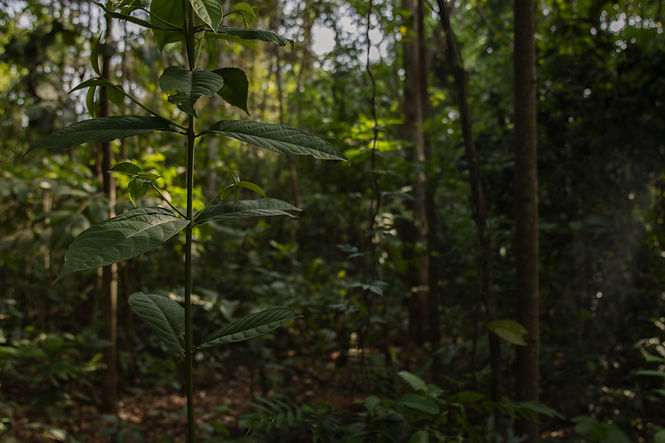
GUARDIANS OF FORESTS AND BIODIVERSITY
Although indigenous communities make up only around 6 percent of the world's population, around 80 percent of global biodiversity is found in their territories (UN 2024; CIFOR 2024). Their displacement threatens not only the loss of the rainforest, but also the loss of a way of life that shows that humans and nature can exist in balance with each other.
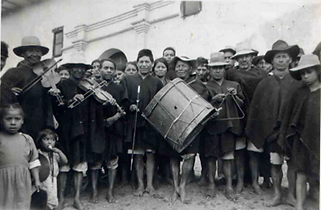
The Inga, also known as the Inganos, live mainly in southwestern Colombia. They are spread across the departments of Putumayo, Nariño, and Cauca, particularly in the Sibundoy Valley and along the rivers of the Amazon Basin.
According to tradition and historical studies, the Inga are descended from an Inca colony that came to this region in the 15th century. Many researchers believe that they are descendants of a Mitma community of the Incas who migrated from the highlands of Peru through the rainforest to Colombia and settled in what is now Putumayo.
Today, the Inga are one of the largest indigenous groups in Colombia, with a population of around 20,000 to 30,000. They speak their own dialect of Quechua, Inga Kichwa, and traditionally cultivate land for growing corn, beans, manioc, coffee, and medicinal plants. The Inga see themselves as protectors of their territory and are committed to passing on their land as a shared heritage to future generations.


Threatened territories and overexploitation of nature
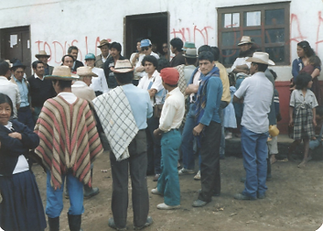
One of the biggest problems facing the Inga and many other indigenous communities in South America is the disregard for their territorial rights. By ratifying ILO-Konvention 169 and enshrining it in its constitution, Colombia has guaranteed indigenous peoples the right to their ancestral lands.
In reality, however, large parts of the Inga territory in Putumayo and the Colombian Amazon are threatened or already destroyed by oil concessions, illegal mining, logging, coca cultivation, and armed conflict. Time and again, families lose their land or villages because actors implement projects there without consulting the communities beforehand. Yet this right to have a say is guaranteed by law.
The disregard for land rights leads directly to the overexploitation of nature. The use of mercury in illegal gold mining contaminates rivers and soil and endangers human health. Slash-and-burn practices, which are used to create new pastureland or monocultures, also destroy forests and destroy the livelihoods of countless animal and plant species.
What is lost is more than just land. It is the loss of a spiritual and cultural connection between humans and nature. For the Inga, the forest is not merely an ecosystem, but a living being that must be cared for, respected, and protected. With the destruction of their territories, centuries-old knowledge about medicinal plants, sustainable agriculture, and the balance of life is also disappearing.

The efforts of the Inga – healing the earth and life
War, deforestation, exploitation, poverty, and pollution threaten life on Earth. The Inga communities also suffer from the consequences of this global crisis and the scars left by armed conflict, illegal exploitation of raw materials, and the destruction of their forests.
Despite these challenges, they have embarked on a path of healing and renewal. They combine ancient knowledge with new forms of learning—an education that unites people and nature, knowledge and heart, tradition and science.
This movement gave rise to WUASIKAMAS, an initiative by Hernando Chindoy Chindoy and Christina Rodriguez. In the Inga language, the name means "guardians of the earth." WUASIKAMAS stands for the Inga communities' commitment to protecting their territories, culture, and knowledge while creating new ways of collaboration between indigenous and scientific thinking.
It is not only about protecting the environment, but about a comprehensive understanding of healing—the healing of the soil, communities, and human consciousness.
You can find out more about the origins and history of WUASIKAMAS under Our Story.